
Hair Thinning & Hair Loss
Hair loss is a medical concern. We treat it like one.
How To Begin Your Care Plan
As your skin responds to treatment, your care plan evolves to help maintain results and address new concerns as they arise.
what makes us different
How We Approach Your Care
Step 1: Evaluate
Hair loss is a medical concern and it deserves a clinical workup. Megan reviews your health history, symptoms, and lifestyle before recommending anything. Lab testing may be recommended when a hormonal imbalance, thyroid issue, or nutritional deficiency is suspected as a contributing factor.
Step 2: Restore
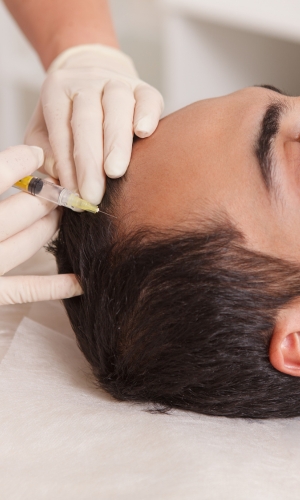
PRF hair restoration with microneedling delivers your body's own concentrated growth factors directly to the scalp to stimulate follicle activity, improve circulation, and support regrowth. A series of three treatments is typically recommended for best results.
Step 3: Support
Prescription topicals and oral medications are incorporated when clinically appropriate. Discussed during your consultation and prescribed based on your specific pattern and cause of hair loss.
Step 4: Maintain
Long-term hair health requires ongoing support. Megan builds a maintenance plan around targeted supplements, dietary adjustments, and periodic PRF treatments to slow further thinning and protect your results.
Why Membership Works
Consistency Creates Results
Healthy skin requires more than occasional appointments.
Your Plan Evolves
As your skin changes, your care plan changes.
Medical Guidance Matters
Work directly with a provider who understands your history and goals.
Prevention Saves Time
Address concerns early before they become bigger issues.
FAQ
ask us
anything
What causes hair thinning or hair loss?
Hair loss can be caused by hormonal changes, stress, nutritional deficiencies, genetics, thyroid issues, or a combination of factors. Identifying the cause is key to effective treatment.
How do you determine what’s causing my hair loss?
What treatments are available for hair thinning?
Treatment may include PRF hair restoration, prescription medications, targeted supplements, and dietary adjustments. Most patients benefit from a combination approach.
How does PRF hair restoration work?
PRF uses your body’s own growth factors to stimulate hair follicles and improve density over time. It’s typically done as a series of treatments for best results.
How long does it take to see results?
Hair growth takes time. Most patients begin to notice improvement within 3–6 months, with continued progress over time as treatments are maintained.
Will I need lab work or medical testing?
Not always, but if an underlying cause is suspected, such as a hormonal imbalance, thyroid issue, or nutrient deficiency, lab work may be recommended as part of your evaluation.
Can hair loss be reversed?
In many cases, hair thinning can be improved and stabilized, especially when treated early. The goal is to slow loss, support regrowth, and improve overall hair quality.
Do supplements really help with hair growth?
They can—if a deficiency is contributing to hair loss. Megan recommends supplements based on your individual needs rather than a one-size-fits-all approach.